
‘Syrians feel justice is absent’ - an interview with The Berlin Pulse
November 25, 2025
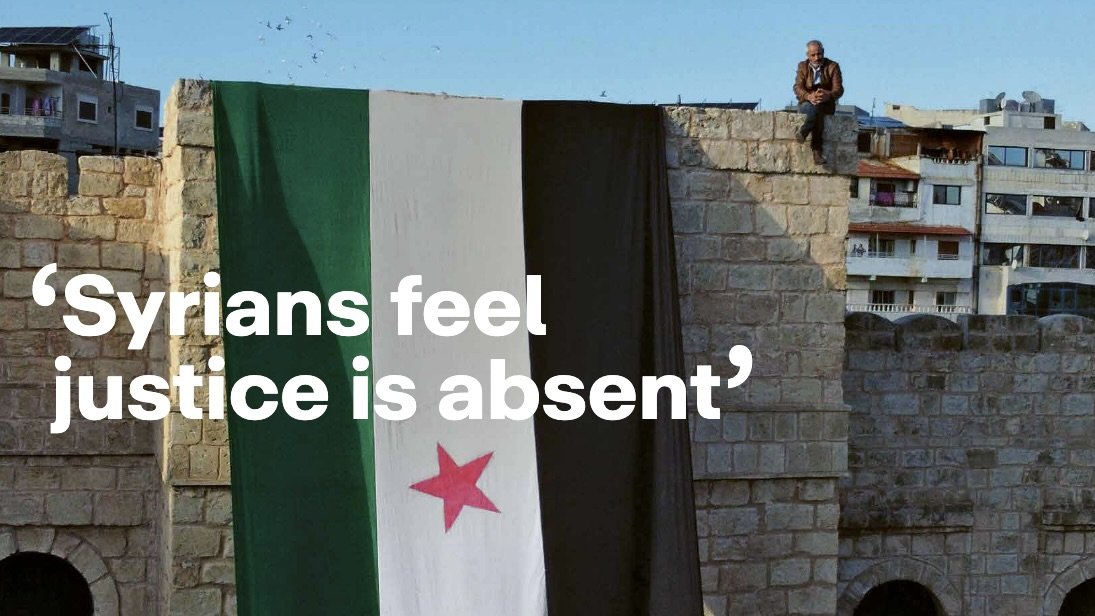
The fall of Assad has not healed Syria. Syrian Rime Allaf speaks about the lack of water, electricity, education and accountability for past atrocities.
Körber-Stiftung: Is the fall of Assad at the hands of the Sunni Islamist political organization and paramilitary group Hayat Tahrir al Sham the end result of the Arab Spring, or the opposite?
Rime Allaf: The Arab Spring died before Assad fell when the world left Syrians with no other choice but the regime and its backers. Every attempt by the democratic opposition and the Free Syrian Army to secure real assistance was ignored; that pushed many Syrians towards the only groups still able to fight: Islamists and jihadis. That is why they succeeded where others failed – and why many Syrians resent 14 years of international inaction, including by the United Nations.
In April, you wrote an article about the mix of hope and fear that followed Assad’s fall. What do the Syrians you speak to feel now: optimism or frustration with the new authorities?
A bit of both. To be honest, most Syrians care firstly about their basic needs. When will we get electricity, water and housing? How can I feed my children? These issues are rarely discussed in the media, which tends to focus on political conflicts such as with Kurdish groups, or with the southern province of Suwayda. These are not daily concerns for the 90 per cent of Syrians still struggling to rebuild their lives and country.
Is Ahmed Al-Sharaa, the new interim president, the right person to solve these issues?
Many believe in his intent and see his change in recent years. Coming after 54 years of Assadism, I think he now wants to be a national leader rather than the Jihadist he was 20 years ago. He shaped his leadership style while running Idlib but governing all of Syria is different. One of his mistakes is trying to do everything himself – there is no prime minister and only a few trusted advisers, which is not sustainable.
Under Assad’s rule, people were abducted, tortured and oppressed. This leaves scars on the soul of society. Can Al-Sharaa heal them?
He probably wants to do so, but the expected transitional justice process has been a big disappointment so far. It seems he fears sparking a new conflict with regime remnants backed by Iran, which lost the most with Assad’s fall. This is partly why he made deals with powerful Assad-era figures. The consequence is that Syrians feel justice is absent, but without it, peace and reconciliation, as seen in countries like Germany, are impossible.
Germany and the EU invested in supporting Syrian civil society to promote democratic values. What role are these organizations playing now?
Germany and Europe funded groups like The Day After, whose board I have served on since its founding to promote democracy, equality, and justice. But funding dried up around COVID -19 and Assad’s slow rehabilitation, forcing many programs to stop. Now, with the regime gone, some funding has returned, and we have reopened an office in Damascus. The worst thing Europe could do now is abandon those still working toward a democratic transition.
Talking about democratic transitions. How do you view the elections held in October?
Syria’s last genuinely democratic parliament was dissolved in 1963. Now, 210 members are either appointed or selected, so it is misleading to call these elections futile and to ask for what is currently impossible. The new parliament will pass laws, giving some structure to the governing system and connecting local officials to the central government. They may also address citizens’ priorities, but without a constitution and real elections, they cannot be representative decision-makers.
For all those years, Syria has been rather isolated due to the rule of Assad. How did you obtain your information?
As a Syrian writer and researcher with 25 years of experience at home and abroad, I have built expertise through frequent travels, my diplomatic family ties, and a broad network across Syrian society. I have spoken with regime insiders, members of the new authorities, and people from diverse social and economic backgrounds – from public employees struggling daily to the ʻVelvet Society,’ the wealthy elite that thrived under Assad.
Immediately after the fall of Assad, politicians in Europe started to pressure Syrians refugees to return to Syria. Do these Syrians even want to return?
Some do but do not have a serious option to do so. Others have integrated and are not considering going back in current circumstances. It is hard to uproot a family settled in Berlin or Vienna and send them to a devastated town with no infrastructure. The either-or choice – permanent return or permanent stay – will not work. Syria needs a mix of young, educated people and experienced professionals familiar with its old institutions. People should be able to keep ties to both their homeland and host country, and it is in Europe’s interest to support those considering return or contributing to Syria’s reconstruction.
With that in mind, do you have a concrete idea for how Germany and Syria could cooperate?
Germany’s expertise could greatly benefit both sides. For example, a company like Siemens could help rebuild and train workers in one small area, coordinating with the Syrian government to bring European experts together with Syrian professionals from the diaspora to train locals and restore essential services and management systems. Having rebuilt after war themselves, Germany and France understand the process well and could offer incentives for Syrians to return. ↖
The interview was conducted on 19 September 2025 by Leona Harting and Jonathan Lehrer and updated in October 2025.
Rime Allaf is a Syrian-born political analyst, writer and communication strategist.
https://koerber-stiftung.de/site/assets/files/50167/the_berlin_pulse_202526.pdf