

Media
Events - Media - Podcasts
Featured
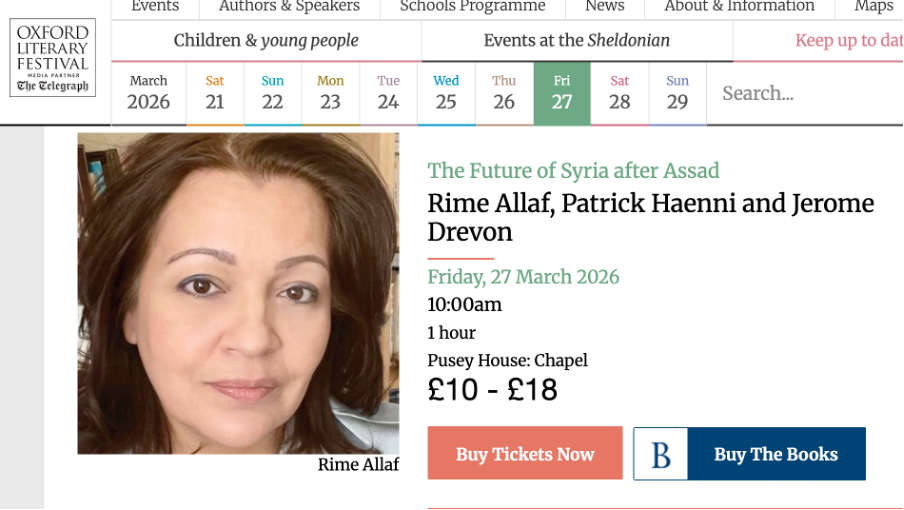
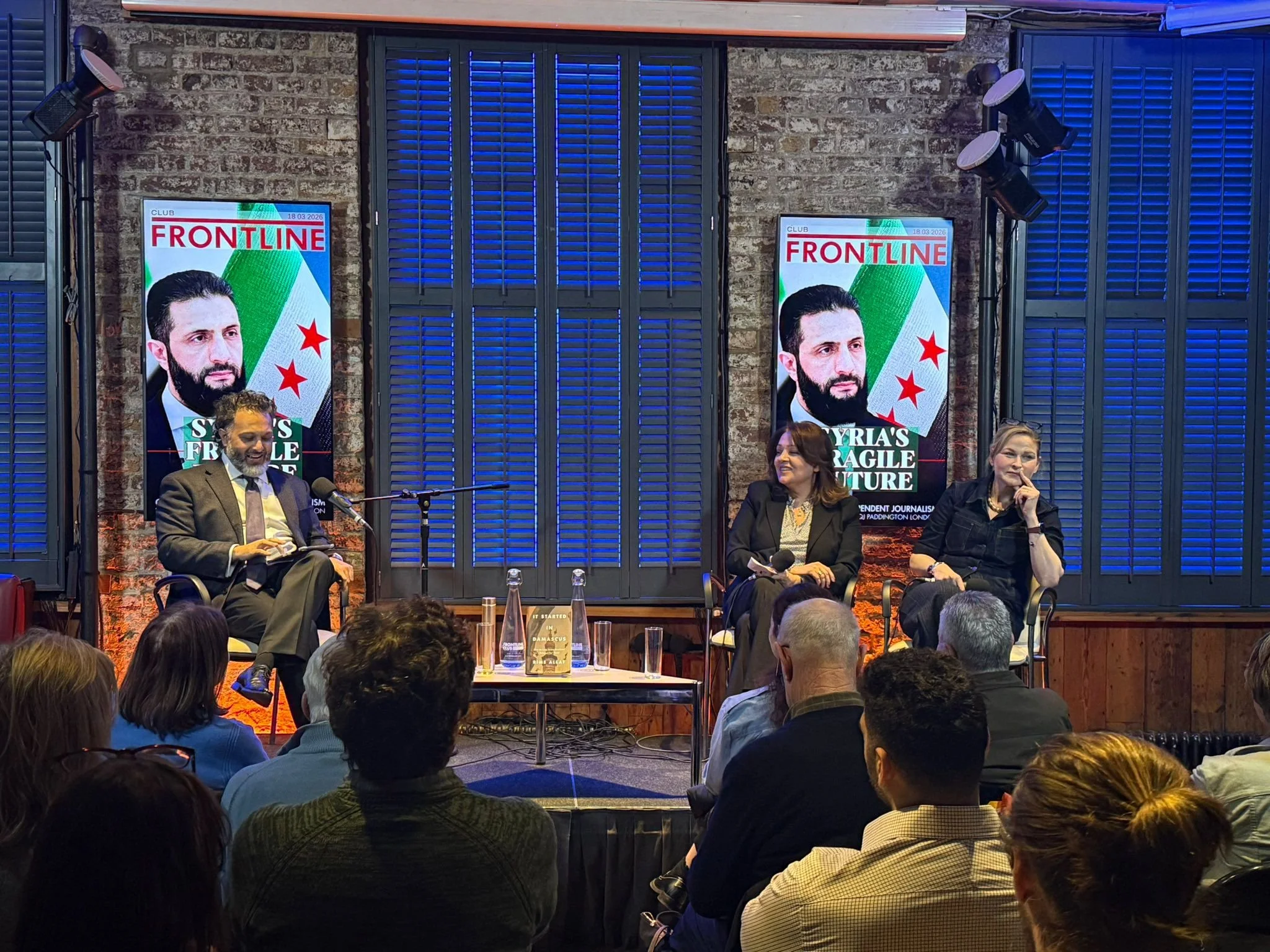




Allaf is a Damascus-born writer, political analyst and former associate fellow at Chatham House. In It Started in Damascus: How the Long Syrian Revolution Reshaped Our World, she explains how Syrians are grappling with a freedom fight many decades old. Allaf says Bashar Assad betrayed the hopes of Syrians that he would be an agent of change when he succeeded his father.
Rime Allaf started writing her book about the history of Syria and its long revolution before the fall of Bashar Al Assad at the end of 2024. The book, It Started in Damascus, traces Syria’s long struggle for freedom through both political history and lived experience - ending with the sudden collapse of the decades-long regime. As Allaf writes, “While the end felt quick indeed, it did not take ten days to bring Assad down: it took five thousand.”
One year ago, an offensive led by Hayat Tahrir al-Sham (HTS) triggered the rapid collapse of President Bashar al-Assad’s government. Since then, under a transitional government led by former HTS leader Ahmed al-Sharaa, Syria has seen a period of profound governance, economic and security challenges and unresolved questions as to how the country unifies and rebuilds after over a decade of war.
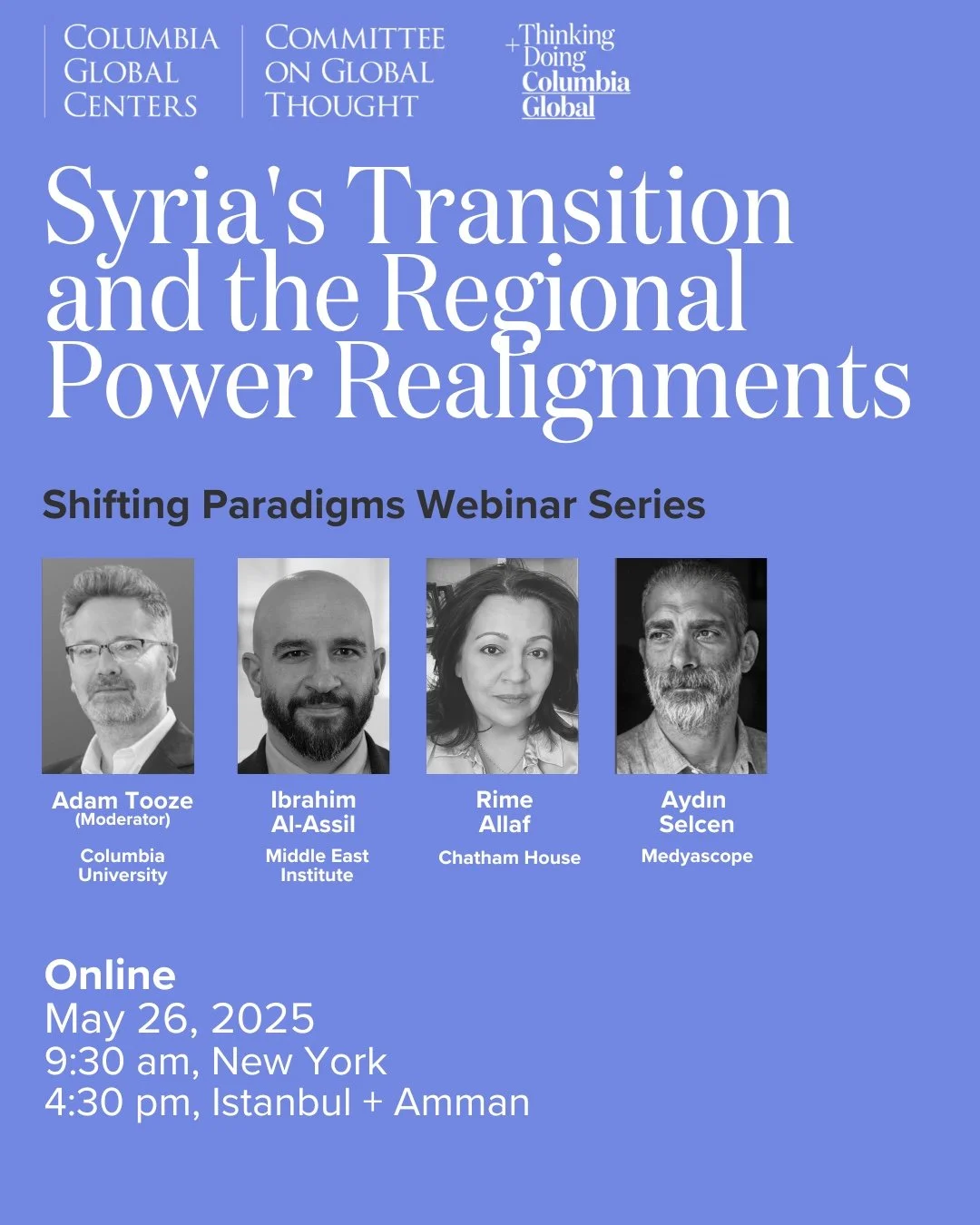
Recent developments in Syria are reshaping the political landscape of the wider Middle East, as regional actors reassess their strategies and alliances in light of the shifting balance of power. In the third webinar of our “Shifting Paradigms” series, a panel of experts will delve into the evolving dynamics and their broader impact on regional geopolitics, following the fall of Bashar al-Assad’s regime and the rise of Hayat Tahrir al-Sham (HTS).
How did the rebels manage to topple Bashar al-Assad’s regime so quickly? How inclusive will any new government realistically be? Who in the region wins and who loses? Andrew Mueller speaks with Syrian-born writer Rime Allaf…
Rime Allaf is interviews by CNN’s Becky Anderson on the situation in Syria the day after the fall of the Assad regime.
Rime Allaf, Yassin Al Haj Saleh, and Joumana Seif in a conversation on Syrian activism and the revolution's impact on the world, on the occasion of the Museum of Activism’s launch in Berlin.
Rime Allaf is a Syrian-born writer and political analyst. In a wide-ranging conversation with Newlines’ Faisal Al Yafai, she recalls living through the end of the Hafez al-Assad era and traces the Bashar years from the initial optimism of Syrians, through the end of the Lebanon occupation and the Iraq War, to the start of the Syrian revolution.
10 years after the start of the conflict in Syria that started as civilians protests against the Assad regime, it is now a proxy war waged on many different fronts. 12 million Syrians – half the pre-conflict population - were displaced. Over 400,000 Syrians lost their lives in this crisis and the infrastructure is in shambles with no straight path forward.
My statement to the Permanent Missions at the United Nations in New York, on the 10th Anniversary of the Syrian Revolution.
The authors trace the origins and escalation of the conflict from 2011 protests in Deraa to the current state of widespread humanitarian devastation and displacement a decade later.
CMEC Director Charlotte Leslie presents the second podcast in a series marking the 10th anniversary of the Arab Spring. In this podcast, Charlotte examines the continuing tragedy of Syria with Simon Collis, UK Ambassador to Damascus in 2010 and Rime Allaf, the Syrian born writer and political analyst.
How will the Caesar Act’s sanctions be enforced and with what goals in mind? What effect are they likely to have within today’s context? Does a policy of escalating pressure on the Assad regime promise diplomatic progress or humanitarian suffering?
As part of the annual Chatham House Syria conference, Rime Allaf, Independent Researcher, discusses the capability of Syria's Constitutional Committee to enact an inclusive constitution and the role of the Syrian opposition in this process.
Is time running out for Syria's opposition coalition forces?
More than 150,000 people, according to human rights groups, have been killed during Syria's three-year civil war and almost 10 million have been displaced. Following the conclusions of the Geneva II peace talks, there is still no imminent end to the conflict in sight.
The proposal to put Syria's chemical weapons arsenal under international control has sparked debate among supporters of a US intervention. Rime Allaf is a Syrian commentator and writer. She tells anchor Marco Werman that the focus on chemical weapons distracts from the ongoing civil war in Syria.
Kofi Annan presented Bashar al-Assad with "concrete proposals" to halt the unrest. Syrian analyst Rime Allaf, who is an associate fellow at Chatham House in London, is not optimistic.
“Assad will not suffocate immediately,” said Allaf, “But it is clear that the regime is running out of money.”
"The regime, at the moment, is trying to cater to a very specific class of people. I think it will go out of its way to make sure those type of Syrians (poorer refugees) do not return to Syria because they are not the Assad regime’s problem anymore and I think they want to maintain this," said Rime Allaf.
"There is reason for this vicious bombing campaign in Idlib – the hitting of schools, and hospitals, schools and markets – this is a calculated campaign, as we all know, to terrorise the population into surrender but also for them to flee because the fewer Syrians they have to worry about the less they have to do," she added.
"[Homs] is one place where the people just don't give up. It has become so symbolic," Rime Allaf, an associate fellow at Chatham House, told the BBC in 2012. "People came with tents and sandwiches, prepared to face tear gas, and they were cut down with bullets."
Syrian opposition leaders want more from the international community to break President Assad's control.
"We are asking to be able to neutralize that air force so that the Assad regime understands that it cannot win this militarily. If the Assad regime is pressured, we believe that the sponsors, the Russians and the Iranians, will understand that there is no way but a political solution," said Rime Allaf, a senior advisor to the Syrian Opposition Coalition.